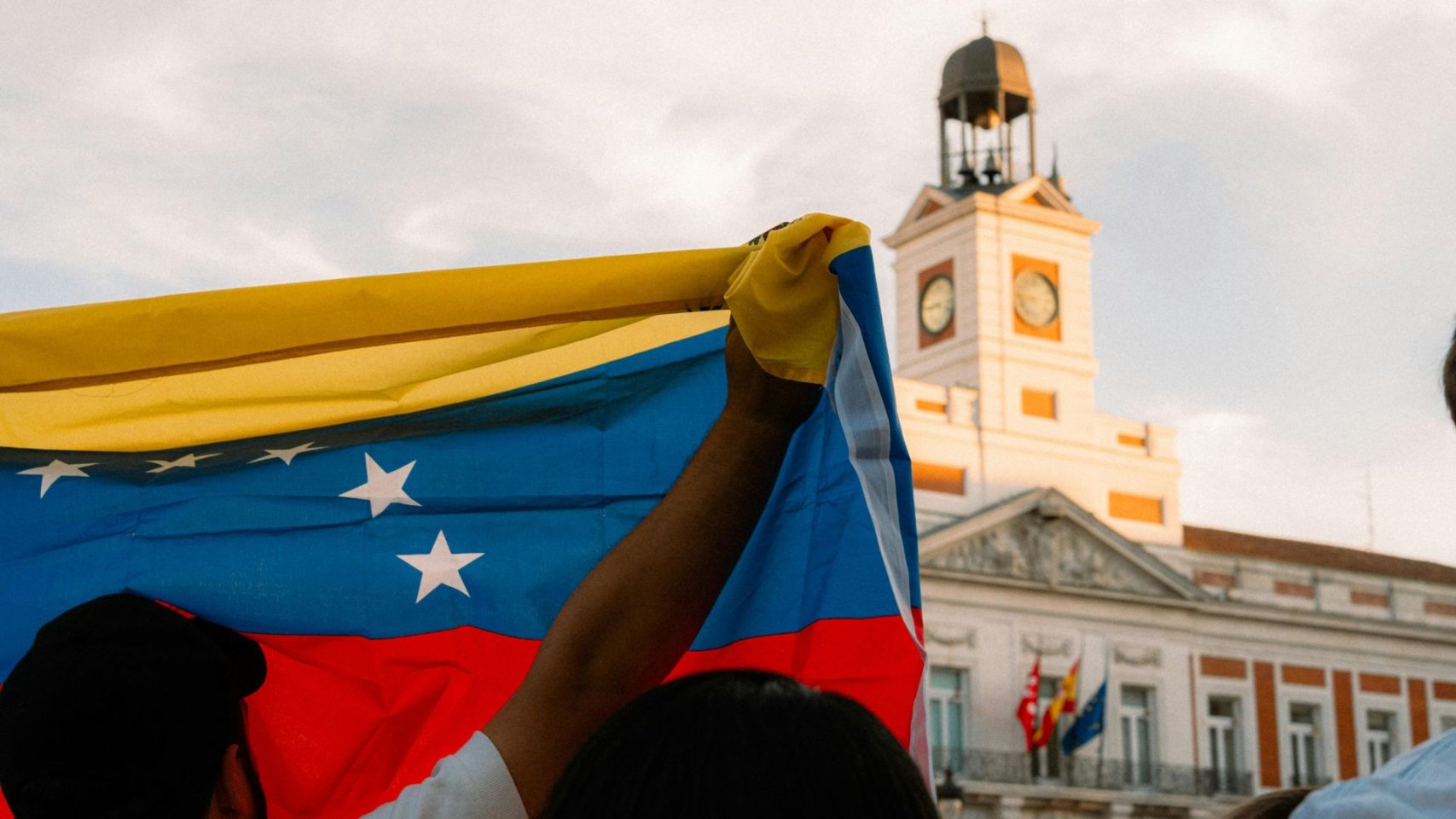
The arrest and subsequent release of María Corina Machado marks another chapter in a story that is at its most tense with Maduro's inauguration
The arrest of Maria Corina Machado, an opposition leader and key figure in Venezuela's political landscape, has added fuel to the protests taking place across the South American country and among Venezuelan communities abroad in anticipation of Maduro's inauguration.
An investiture that took place on Friday morning and through which Nicolás Maduro was sworn in as president of Venezuela, ensuring himself another 6 years in power and without showing the electoral records that were demanded by the opposition and a large part of Venezuelan civil society.
In the Canary Islands, the more than 75.000 expatriates living on the islands are feeling the impact of recent events and are witnessing, with anticipation and fear, the riots and demonstrations that could be unleashed as early as this Friday after the investiture on the so-called "eighth island".
Machado, one of the leading critics of the Nicolás Maduro regime, was arrested on Thursday by agents of the Bolivarian National Intelligence Service (SEBIN) in what the opposition has described as an attempt to "silence democracy."
The news has made headlines in the international press. Newspapers such as The New York Times, El País and Le Monde have highlighted global concern about the deterioration of democratic freedoms in the South American country. Political analysts have agreed that this development, just before Maduro's inauguration, could be a turning point in increasing international pressure against the Chavista regime.
The leader had gained prominence following the opposition primaries held in 2023, where she was widely supported as a presidential candidate for the 2024 elections, which she ultimately was unable to run in after being disqualified by the Maduro regime. Her arrest occurs in a context of constant political tension in the country, with accusations of systematic persecution of opposition leaders and citizens who dissent from the Maduro government and its measures.
A politically turbulent situation that does not benefit the economy of a country weakened by rampant inflation and a deeply devalued currency that has left millions of citizens struggling to meet basic needs such as food and medicine.
This economic deterioration has driven mass migration to neighboring countries and more distant communities, such as the Canary Islands, where the presence of the Venezuelan and Latin communities has historically been notable.
Of the more than 75.000 Venezuelans living in the Canary Islands, almost all have direct ties to family and friends in Venezuela, and are therefore concerned about how the obstacles to a democratic transition continue to arise.
The relationship between the Canary Islands and Venezuela dates back to the 19th century, when thousands of Canarians emigrated to the South American country in search of opportunities. A Canarian diaspora that blended with a culture very similar to that of the archipelago and with a nearby town that welcomed and allowed thousands of Canarian families to grow who did not see a future in the archipelago.
Despite the more than 5.700 kilometres that separate the Canary Islands from Venezuela, today the relationship between the two territories can be seen in many aspects; from the similarities between both cuisines to the presence for decades of the local sport in the Canary Islands, Canarian wrestling, in the South American country.