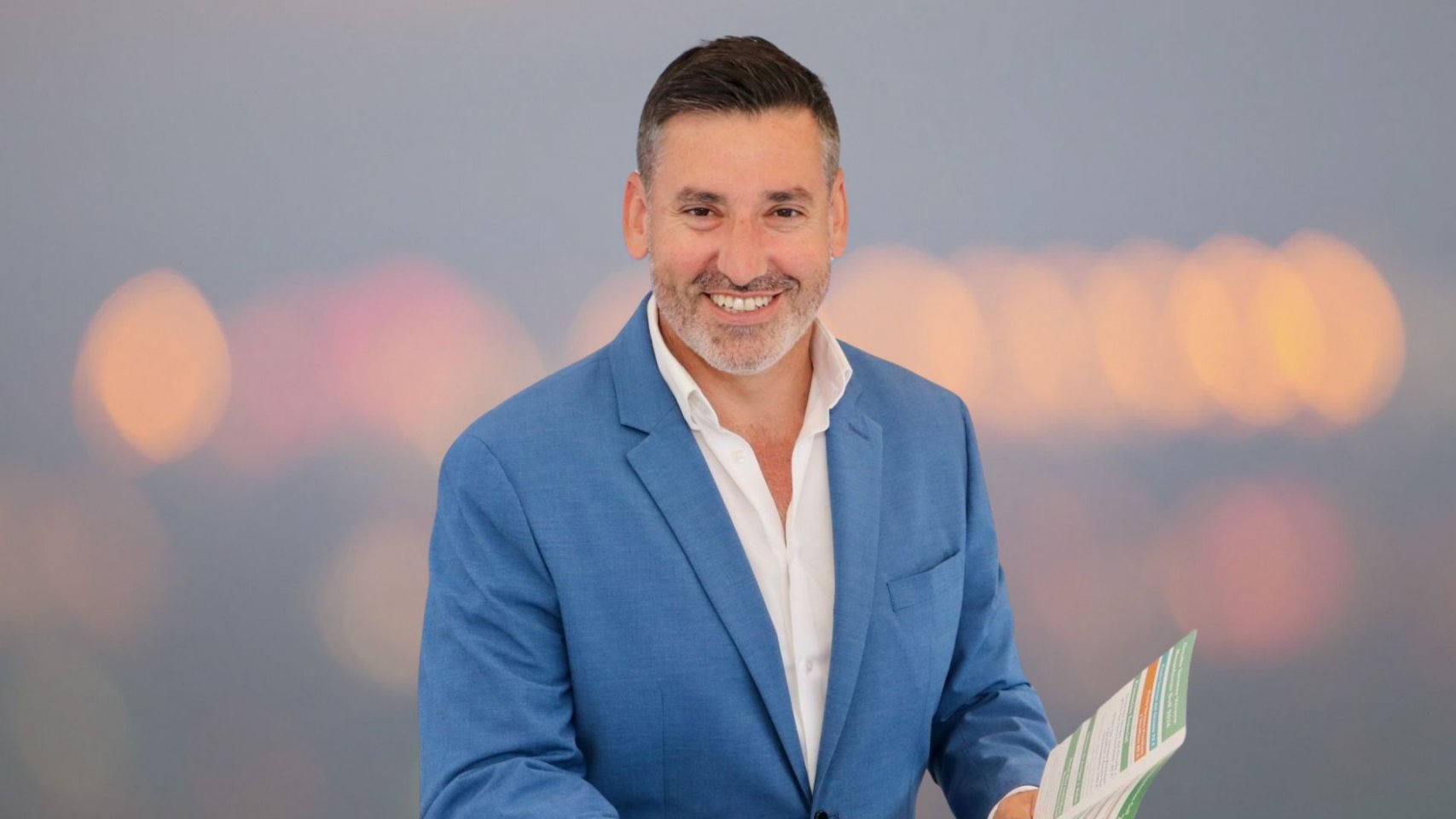
P; Alejandro Marichal: “The great challenge for Maspalomas is to transform 65 years of tourist success into well-being for our residents”
R : That's a very pertinent question, and frankly, I would be very happy if the headquarters of the Gran Canaria Tourist Board were located in Maspalomas. I believe there are historical, economic, and institutional reasons to consider this possibility.
We must not forget that the tourism development of Maspalomas Costa Canaria has its founding milestone on October 15, 1962, long before the creation of the current Tourism Board in 1985. More than six decades later, San Bartolomé de Tirajana is the third most popular tourist destination in Spain in terms of hotel overnight stays, only behind Barcelona and Madrid, according to INE data from 2025.
We are the leading tourist destination in Gran Canaria, one of the Canary Islands' major attractions, and a brand with extraordinary international reach. Therefore, I believe it would be reasonable for this economic and tourism prominence to be matched by a greater institutional support.
The Tourism Board is an island-wide organization that must work for all of Gran Canaria, regardless of where its headquarters are located. However, locating it in Maspalomas would bring its administrative structure closer to the heart of our main economic activity, strengthening its ties with the business sector and tourism professionals.
Furthermore, I believe we need to start understanding administrative decentralization more naturally. Not all institutions necessarily have to be concentrated in the capital. Gran Canaria has several economic hubs, and its institutional organization can reflect that reality.
Of course, I raise this with the utmost respect for the Cabildo and the work carried out by the Patronato, and not as a demand, but as a constructive proposal that the next Cabildo could study.
Because, ultimately, if Maspalomas occupies a central place in the tourism economy of Gran Canaria, it should also be able to occupy a central place in its institutional and administrative structure.
2. Political leadership and management from the Mayor's office
Q: Leaders like Paulino Rivero or Bravo de Laguna took direct charge of Tourism during their terms in office. If you become Mayor, will you keep the Tourism Department under your direct control?
A: No, and precisely because of the importance of tourism for San Bartolomé de Tirajana. I believe that a council department of this magnitude requires specific dedication, its own leadership, and ongoing political support, always with the backing and direct involvement of the Mayor's office.
My proposal would be to strengthen the Tourism area, provide it with greater economic and human resources and develop a much more active tourism policy, with the capacity to promote its own initiatives and coordinate in a cross-cutting manner with Urban Planning, Public Works, Environment, Culture, Commerce and the rest of the municipal areas.
Tourism cannot be limited to promoting the destination. It must actively participate in its transformation, in improving the experience of our visitors, and in the competitiveness of Maspalomas Costa Canaria.
And for that, you need a person who is specifically dedicated to this responsibility, with management skills and the ability to coordinate with the rest of the municipal government.
The role of a mayor is to lead and represent the entire City Council, address the needs of all residents, and ensure that all departments work together toward a common goal. This does not mean neglecting tourism; quite the opposite: giving it the institutional support it deserves without diminishing the specific attention it requires.
My idea is that Tourism should have a strong councilorship, with a budget, capacity for initiative and its own leadership, supported by a Mayor's office fully committed to the main economic engine of our municipality.
3. Licenses and administrative security
Q: An investment fund is hesitating between investing €30 million in Maspalomas or taking it to the Balearic Islands due to the licensing backlog. What realistic timeframe can you offer them today?
A: The first thing I want to make clear is that we have significantly improved the Urban Planning Department's management capacity. When we came into office, the City Council was processing an average of 39 permits per year, and we have increased that to around 150 annually. Furthermore, between May 2023 and July 2026, we granted 368 major building permits, associated with €313,6 million in private investment, which has already generated more than 5.500 estimated direct and indirect jobs. These are investments linked to permits, not necessarily completed, and represent projected employment, not jobs already created. This work has allowed us to move forward with projects that had been waiting for years.
Regarding processing times, we have managed to reduce the average processing time to around six or seven months, and our goal is to continue lowering it to three. However, it wouldn't be realistic to guarantee an identical timeframe for all projects, because each application has its own specific characteristics and must comply with legal requirements.
What we can offer investors is a City Council that is working to expedite procedures, provide answers, and offer legal certainty. Because every investment that is stalled also represents lost job opportunities and delayed economic activity.
4. Urban planning and General Urban Development Plan
Q: Without an updated General Plan, buying a mature asset to build a 5-star hotel is causing panic due to the risk of regulatory paralysis. How do you guarantee they won't get caught out?
A: It's clear we need to update our planning, but that doesn't mean we have to halt investments until we have a new General Plan. We must use all the urban planning tools that the legislation allows to provide legal certainty and make viable projects possible.
And the results can be verified with specific examples. Between May 2023 and July 2026, we granted 368 major building permits throughout the municipality. Furthermore, the list of private projects linked to the tourist area includes 30 projects, with budgets totaling approximately €166,1 million. These are budgets associated with authorized projects, not necessarily with actual investment.
The list of 30 projects used to quantify private tourism investment is a different count from the 34 licenses to renovate historic tourist complexes reported by the City Council.
Among the largest examples are the five-star Lopesan hotel (€61,3 million), the Viajes Insular project (€48,6 million), the expansion of Villa del Conde (€16,4 million), and the transformation of Tajinaste into a five-star establishment (€6,5 million). These are complemented by projects such as Jardín del Sol/Sholeo (€4,9 million), Playa del Sol/Sholeo (€4,4 million), Puerto Deportivo Pasito Blanco (€3,5 million), Sahara Playa (€2,3 million), the redesign of the Maspalomas golf course (€2,2 million), Monte Feliz (€2 million), Bahía Feliz (€1,8 million), Hotel Beach Club (€1,7 million), Salmón Playa (€1,6 million), Bungalows Green Ocean (€1,5 million), Royal Playa (€1,5 million), and Hotel Rondo (€1,3 million).
The list also includes Tajinaste Beach, Apartamentos Arco Iris, Jardín del Atlántico, Apartamentos Los Ficus, Hotel Catarina, the Senador restaurant, and various projects involving swimming pools and bungalow complexes. These are very different examples, ranging from large investments to renovation and improvement projects, illustrating the administrative work being carried out in our main economic zone.
Furthermore, there are planning instruments that allow us to move forward with the modernization of establishments and the regulation of specific areas. One example is the planning amendment that enabled the transformation of the three-star Aparthotel Principado into a five-star hotel. We are also working with the Government of the Canary Islands on a new Modernization Plan for Maspalomas Costa Canaria, which should help us renovate tourist areas and resolve long-standing urban planning issues.
The goal is to provide legal certainty. We want developers to understand the real possibilities of their projects, the conditions they must meet, and the procedures they need to follow. Investment requires clear rules and a responsive administration. And we are demonstrating this with licenses and concrete projects, not just with declarations of intent.
5. Tax incentives for transformation
Q: ESG requirements force us to spend fortunes on decarbonization. Will the City Council lower taxes like the ICIO or IBI for those who renovate?
A: Honestly, I don't believe that the solution to encouraging the renovation of tourist establishments necessarily lies in reducing taxes like the IBI (property tax). The Canary Islands has very important fiscal instruments, such as the Canary Islands Investment Reserve (RIC), which specifically incentivizes business investment, including the modernization of facilities when legal requirements are met.
I think we need to ask ourselves a fundamental question: how do we ensure that the wealth generated by tourism also benefits the people who live in San Bartolomé de Tirajana?
The City Council has the responsibility to properly manage the income it receives through municipal taxes and fees and transform it into better public services, housing policies, well-maintained parks and public spaces, improved educational infrastructure and, ultimately, a higher quality of life for our residents.
Because tourism success cannot be measured solely by the number of visitors, overnight stays, or the profitability of establishments. It must also be measured by its capacity to generate well-being in the society that sustains that activity.
And here I believe we must be especially careful. If we are unable to maintain a balance between the wealth generated by tourism and the quality of life of residents, we risk our destination ultimately dying of its own success. When citizens perceive that tourism is thriving, but their living conditions are not improving, social tensions and a backlash against an activity that has been fundamental to our development can arise.
Therefore, my approach is not to pit the interests of the tourism sector against those of the residents, but to ensure that both benefit from the same development model.
The best incentive the City Council can offer is efficient administration, legal certainty, good infrastructure, and quality public services. Because tourism will only be truly sustainable when its economic success also translates into social well-being for those of us who live here.
6. Urban environment and commercial renewal
Q: What's the point of renovating a hotel if you go outside and the nearby shopping centers are in a sorry state? What real public works projects are going to start?
R: That's precisely one of the major issues we need to resolve. For years, tourist establishments have been renovated, but this modernization hasn't always been accompanied by a corresponding improvement in public spaces and our commercial areas.
We are working on projects such as the remodeling of the Maspalomas Market, the recovery of the Oasis Palm Grove, the improvement of the walkways in the Maspalomas Ravine and the pedestrian and cycling connection between El Hornillo and Pasito Blanco.
But there is a particularly complex challenge we must face: the renovation of those shopping centers in Playa del Inglés that require modernization. And we must recognize that the solution goes beyond the City Council's capacity to act. We are talking about private properties that, in many cases, belong to dozens or even hundreds of owners, with different interests and legal situations, which makes reaching agreements for their renovation extremely difficult.
The Metro shopping center is a good example. Faced with a lack of agreement among its owners regarding the building's rehabilitation, the City Council initiated proceedings to declare it economically unsound, thus enabling subsidiary intervention that could lead to its demolition. However, some owners, in the legitimate exercise of their rights, have gone to court and requested precautionary measures, which has limited the City Council's actions and hindered a definitive solution.
And what does this experience show us? That it's not enough to simply approve urban planning instruments or require property owners to renovate their buildings. If we want results, we need a specific strategy, with a dedicated technical and legal team working from the City Council, on an ongoing basis and hand in hand with the property owners, seeking viable solutions from an urban planning, legal, and economic perspective.
We also need the involvement of other public administrations, especially the Island Council and the Government of the Canary Islands, through support and funding programs that incentivize these renovation projects. We cannot expect to solve a problem of this magnitude solely at the municipal level.
In parallel, we are working with the Government of the Canary Islands on a new Modernization Plan for Maspalomas Costa Canaria that will offer urban planning alternatives to facilitate the renovation of these spaces and improve the configuration of Playa del Inglés.
I am aware that it will not be an easy task, nor will it have immediate results. But I believe it is worth taking on this challenge with determination, because we are talking about recovering strategic spaces for our tourist destination.
Our priority must be to renovate and improve what we already have. It makes no sense to invest in modernizing our hotels if we are not also able to transform the surrounding urban and commercial environment. And to achieve this, we need planning, financing, legal certainty, and, above all, an administration that sits down with owners to find real solutions.
7. Critical infrastructure and ESG
Q: Water shortages and poor waste management scare audit committees about funding. Is the municipal infrastructure up to par?
A: Frankly, I don't agree that we can talk about widespread waste management problems or frequent water supply disruptions. The fact that occasional incidents may occur doesn't mean our public services are malfunctioning. That said, we certainly have room for improvement, and it's our responsibility to continue modernizing them.
During this legislative term, we have launched a tender for the collection of packaging, paper, and cardboard, valued at nearly five million euros, a service that was previously without a valid contract. This has resulted in the replacement of the old containers and a significant improvement in service delivery.
In addition, we have a dedicated team that reinforces cleaning in areas not covered by the regular service. We are also working on implementing a fifth container for organic waste, as well as modifying the waste collection and street cleaning contract to incorporate more machinery, mechanize certain tasks, and introduce high-pressure cleaning equipment to improve the condition of our streets.
Regarding water, we are facing one of the most important procurement processes for the future of the municipality. In the October plenary session, we took a fundamental step in processing the new concession for the drinking water supply, sewage, wastewater treatment, and reuse services, with the initial approval of the preparatory documentation.
We are talking about a concession projected for 25 years, which includes an initial investment of 45 million euros during the first five years, at a rate of nine million euros annually, in addition to a replacement and improvement program of 700.000 euros per year.
This is an action of enormous importance because it is not simply about renewing a contract, but about establishing the conditions to modernize our hydraulic infrastructure, improve the quality of service and guarantee its long-term sustainability.
Therefore, we are making concrete decisions, renewing services, incorporating resources, and preparing investments that will have effects for many years.
A top-tier tourist destination needs equally high-quality public services. And this requirement applies not only to our visitors, but above all to those of us who live here. Because the quality of a tourist destination begins with the quality of life of its residents.
8. Attracting luxury brands
Q: To increase the ADR (average daily rate), you need ultra-luxury global brands. If you sit down with Four Seasons or Rosewood, what do they offer compared to the Caribbean or Marbella?
R: Well, competing with the American Caribbean isn't easy, but we also mustn't forget that we are the European Caribbean, we are the Canary Islands. And we have something that sets us apart: an extraordinary climate year-round, air connectivity with major European cities, legal security, and well-established tourism infrastructure.
Marbella has an exceptional position in luxury tourism, but Maspalomas has an important advantage: the possibility of enjoying the destination all year round, without such a marked seasonality.
However, attracting brands like Four Seasons or Rosewood requires that the urban environment, public services, and complementary offerings are up to par. And that's where we have work to do.
But we must also not forget that we have hotel chains that have been committed to excellence for decades and deserve all our recognition.
Our goal should not be to compete for more tourists, but to offer higher quality, generate more value, and ensure that this wealth also translates into better jobs and well-being for our neighbors.
9. Market diversification
Q: Relying almost exclusively on German and Nordic customers limits your spending margin. What are you going to do to attract American customers or the MICE segment?
A: I think we need to be realistic. Reaching new markets depends largely on air connectivity, and currently, Gran Canaria doesn't have any direct, regular flights to the United States. Therefore, before considering major promotional campaigns in that market, we need to improve those connections.
But we must also not lose sight of the fact that our main market is Europe, with hundreds of millions of potential visitors and a huge margin for continued growth, especially in higher-income segments.
And with regard to congress, convention and incentive tourism, I believe we have extraordinary conditions to promote it: year-round climate, good hotel facilities and connectivity with major European cities.
Our priority should be to diversify intelligently, make better use of the markets we already have connected to, and attract tourism that generates greater value for our destination.
10. Legal security and residentialization
Q: The mix of residential apartments and hotel rooms within the same complex undermines management. Will you staunchly defend the unified management model?
A: To begin with, I disagree with the premise of the question. For decades, Maspalomas has broken tourism records while, in certain complexes, residential and tourist uses coexisted. Therefore, claiming that this coexistence destroys tourism management does not reflect the reality we have experienced.
We support the unified management of tourist accommodations, but we believe it's necessary to review how it's implemented. The management unit should organize and guarantee the management of apartments intended for tourist activity, not impose itself on properties that their owners legitimately use as residences.
The key is to distinguish between tourist accommodation units and residential homes, respecting the rights of their owners and ensuring that each use meets its own conditions.
We maintain that those who wish to develop their property for tourism should be able to do so within a single management unit, and that those who have the right to use it as a residence should be able to continue living there. These are not inherently incompatible realities.
Our goal is not to pit residents against tourists, but to establish clear rules so that both uses can coexist with legal certainty.
11. Regulation of holiday rentals
Q: Will you dare to curb holiday rentals on tourist land so as not to harm the profitability of regulated hotels?
A: I think we must clearly differentiate between residential and tourist areas, because we cannot apply the same solution to different realities.
In San Bartolomé de Tirajana we have approximately 4.223 holiday homes, of which approximately 80% are located in potentially tourist areas.
Our intention is to significantly limit this activity in residential neighborhoods such as San Fernando or Castillo del Romeral, where it can affect coexistence and hinder access to primary housing.
However, in tourist areas we must recognize that holiday rentals are also part of our accommodation offer, allowing small owners to participate in the tourist economy and helping to distribute their profits among restaurants, shops and other businesses.
In fact, we have already passed the public consultation phase of the municipal ordinance that will regulate this activity and we are working on its drafting, with the aim of bringing it to initial approval during the first quarter of 2027.
Ultimately, we want to regulate holiday rentals, protect our residential neighborhoods, and offer legal certainty to all operators, without unnecessarily pitting the different models of tourist accommodation against each other.
12. Final message to international capital
Q: There's 50 million sitting in a London office waiting to be allocated. Why should Maspalomas sign today and not Marbella or Greece?
A: Because Maspalomas is a well-established tourist destination, with an extraordinary international track record and concrete projects to continue modernizing.
We have climatic conditions that allow us to maintain tourist activity throughout the year, a recognized accommodation offer and a business sector that continues to invest in renovating its establishments.
But there's something I consider fundamental, and which is often undervalued: the professionals who work in our tourism sector. The quality of Maspalomas doesn't depend solely on its hotels, beaches, or infrastructure. It also depends on thousands of workers who serve our visitors every day, who understand their needs, and who have contributed for decades to building our destination's international reputation.
That professionalism, accumulated experience, and quality of service are also a guarantee for those who decide to invest in Maspalomas. We must continue to invest in their training, improve their working conditions, and recognize their contribution to our main economic activity.
In addition to all this, we are working to ensure the City Council offers greater legal certainty and administrative efficiency. We have increased the number of licenses granted, unblocked projects that had been stalled for decades, and given urban planning viability to important investments, such as those related to Meloneras 2A.
We cannot guarantee the profitability of a private investment, as it depends on many factors. What we can offer is a destination with year-round activity, qualified professionals, tourism experience, and an administration that works to facilitate viable projects.
Maspalomas is not just a place to invest. It's a destination that has built its prestige over decades thanks to the work of its businesses and, especially, the people who make it possible for visitors to want to return every day.