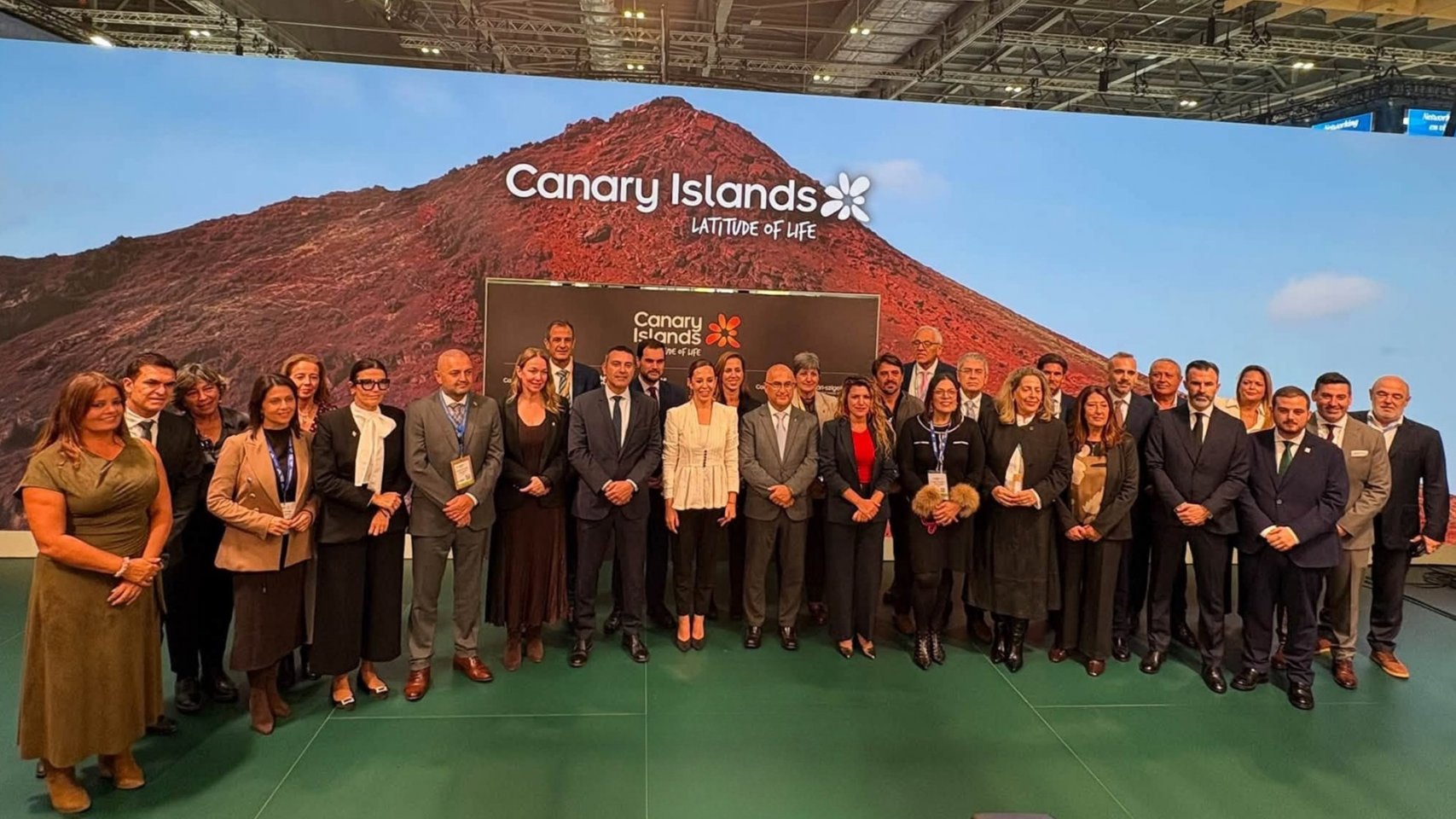
The delegation representing the tourism sector of southern Gran Canaria is attending the World Travel Market in London with a complex operational outlook. International air capacity reports updated to November 3, 2026, reflect a year-on-year contraction of 1,67% in the volume of seats scheduled to the island for the period between March and May, following a slight increase of 1,92% between December and February. This adjustment in direct connectivity with the British market directly impacts the southern region—centered on Maspalomas, Playa del Inglés, and San Agustín—forcing tour operators and accommodation managers to intensify their commercial strategies to protect profit margins during the winter season.
Faced with a decline in flight availability from the UK, the hotel sector in the south of the Canary Islands is basing its competitiveness on a strong qualitative assessment in the customer satisfaction indicators compiled by Lurmétrika. Gran Canaria leads the average rating among competing destinations with 8,52 points, surpassing Tenerife (8,33), Mallorca (8,34), and the Costa del Sol (8,39). The most highly valued attributes of Gran Canaria's hotel offerings are staff professionalism (9,13 points), location (9,05), cleanliness (8,89), and comfort (8,86), placing the value for money at 8,37 points.
Regarding hotel occupancy, actual data and estimates from the last six months show an upward trend in the southern resorts of the island. Records show occupancy rates ranging from 69,22% in June to the peaks of the summer period, with 77,84% in July and 83,72% in August. Stable levels are projected for the start of the winter season, with 79,85% in October, 77,95% in November, and 82,85% in December.
In terms of pricing, the comparison of average daily rates (ADR) positions Gran Canaria competitively with its main Mediterranean and island rivals. The average daily rate in the island's hotels shows seasonal variations, ranging from €143,82 in May to €195,46 in February, with an estimated average rate of €191,49 for November and €178,88 for December. This pricing strategy allows the island to absorb fluctuations in British demand, whose flows, according to Lurmétrika's predictive models, are estimated at 103.000 tourists in October, 84.000 in November, and 91.000 in December of 2026.
The business strategy of tourism companies in southern Gran Canaria at the London trade fair prioritizes optimizing revenue per available room (RevPAR) and containing operating costs. In a context where British international air capacity is experiencing slight negative fluctuations for the spring, maintaining quality standards and diversifying the destination experience are emerging as the key tools for preserving the profitability of the region's tourism sector.