The total proven economic loss for the company affected by the damages and the stolen product amounts to 172.188,69 euros
The Civil Guard of the Las Palmas Command , as part of “Operation Seabass” , has dismantled a criminal network dedicated to the systematic theft and subsequent illegal sale of sea bass . These activities had been taking place since last May at the marine facilities located in Castillo del Romeral , within the municipality of San Bartolomé de Tirajana.
The investigation began last August , following a formal complaint filed by the affected company regarding the constant thefts and damage to nets at its fish farms. A comprehensive preliminary report commissioned by the affected company itself proved essential to clarifying the facts.
Based on this information, the ROCA Team agents were able to confirm the existence of an organized group of three people who used two semi-rigid boats to approach the sea cages. While one boat acted as a lookout on the surface, the other two submerged, equipped with spearguns, to illegally catch large sea bass, piercing the nets at a depth of almost two meters. The fish were then transported by road and distributed clandestinely to restaurants in the coastal areas of the island's south coast.
Operation phase and health inspections
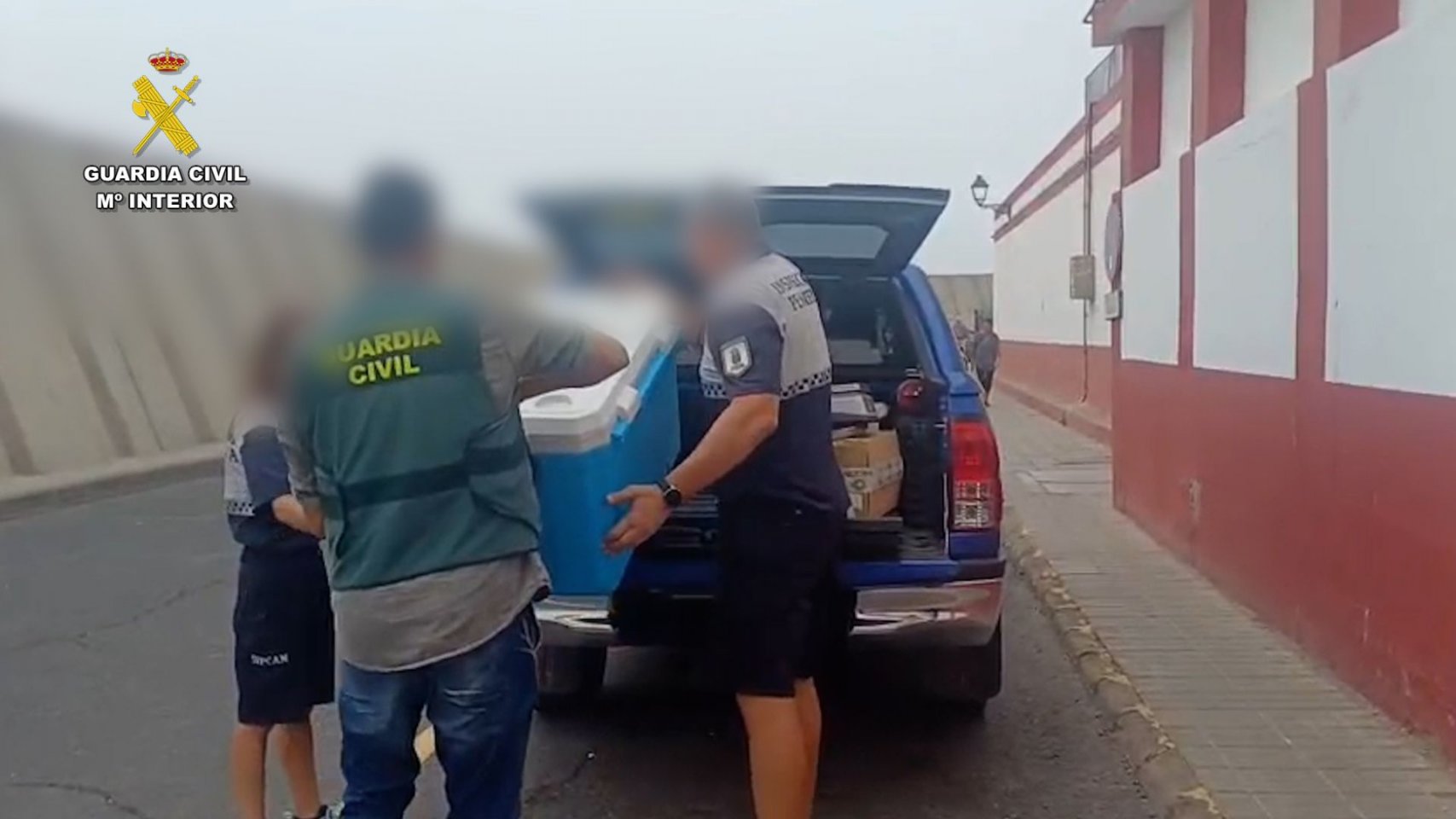
The operation began on September 22nd , when the Civil Guard, in a joint effort with the Fisheries Inspection Service and the Canary Islands Government's health authorities, coordinated an urgent technical and sanitary inspection of the identified premises. During these inspections, a total of 40,2 kilos of illegally sourced sea bass , caught clandestinely and lacking any type of labeling , invoice , or traceability control , were immediately removed from the market.
The laboratory confirmed a positive result for the presence of ciguatoxins . The most critical aspect of the operation was detected in one of the establishments inspected in the municipality of Mogán, where officers found specimens of silverside, of unjustified origin, alongside the stolen sea bass. Since this species is subject to official ciguatoxin control, biological samples were urgently sent to the University Institute of Animal Health at the University of Las Palmas de Gran Canaria (IUSA). The laboratory confirmed a positive result for the presence of ciguatoxins. The presence of this potent neurotoxin, which is not destroyed by cooking or freezing, constituted a serious and direct danger to the health of diners, leading to the opening of separate proceedings for a crime against public health, directly charged against the establishment's management.
The operation culminated in mid-October with five people under investigation, though not arrested: the three individuals who carried out the burglary at the fish farm and the two owners of the restaurants in the Puerto Rico and Playa de Mogán areas for receiving stolen goods, having purchased the illicit merchandise for profit. The owner of the Mogán establishment also faces charges related to drug trafficking. Furthermore, evidence and identifying information gathered at a third establishment in San Agustín have been submitted to the judicial authorities due to documented suspicions of undocumented fish shipments.
In light of these events, the Civil Guard and the Government of the Canary Islands warn of the serious health risk posed by purchasing or consuming products outside of legal commercial channels, as these lack the controls necessary to prevent food poisoning from marine biotoxins. They also reiterate the requirement that all fishery products intended for consumption must display their batch number and traceability information in accordance with the Food Quality Law, the only mechanism that guarantees consumer safety and health.