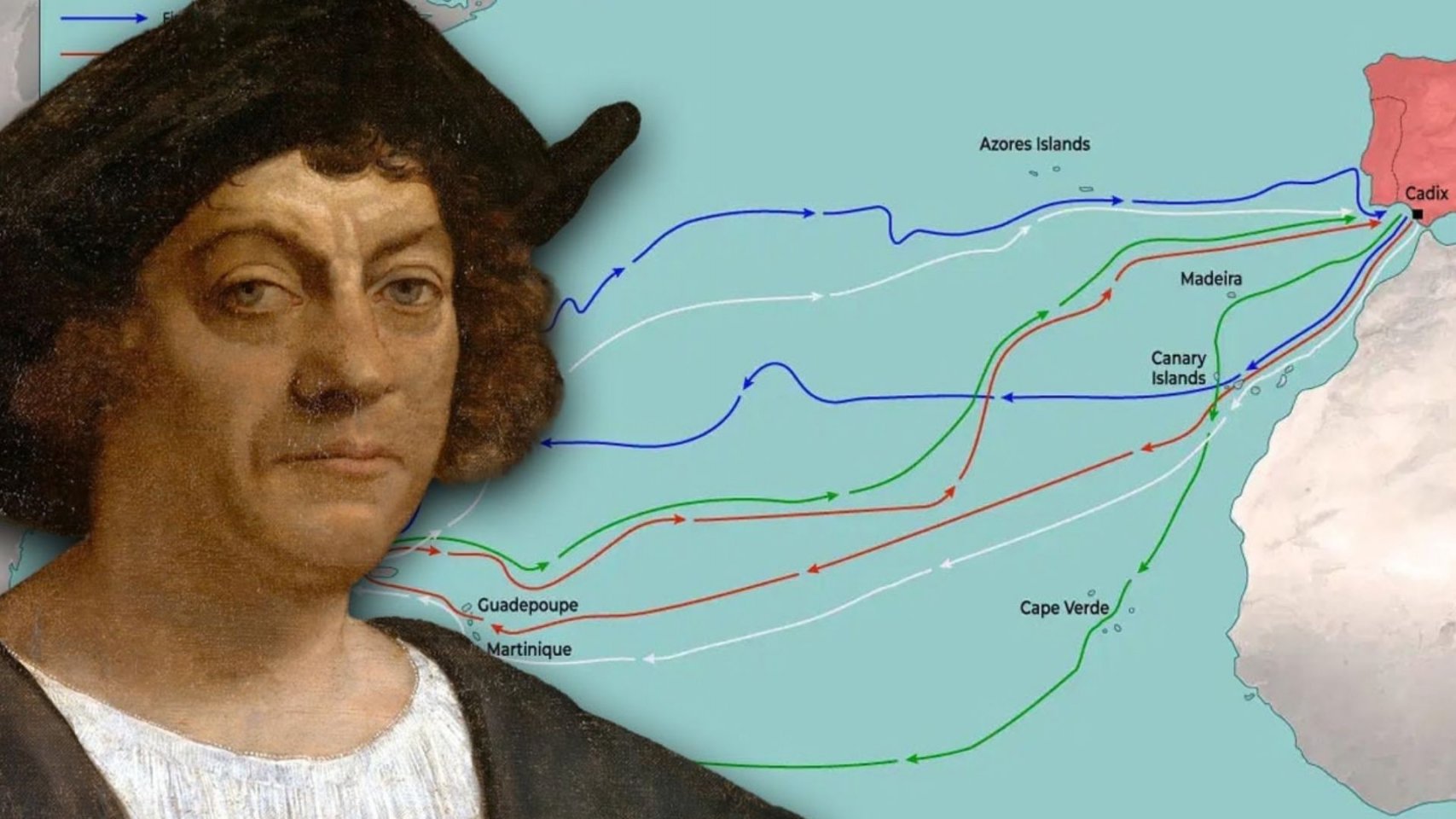
The natural enclave of the Maspalomas Oasis holds one of the most pivotal and least-known chapters of the 16th-century Atlantic epic. On May 25, 1502, the fleet commanded by Christopher Columbus anchored off the southern coast of Gran Canaria during the final stages of his fourth and last voyage to the New World. Far removed from the contemporary tourist scene, the southern landscape then stood as a pristine ecosystem dominated by marshland and extensive palm groves, strategically chosen by the Genoese navigator to provision his four ships—the caravel Capitana and the carracks Gallega, Santiago, and Vizcaína—with brackish water and tamarisk wood before embarking on the final ocean crossing without intermediate stops.
Columbus's presence in the southern part of the island is well documented by historians of the caliber of Antonio Romeu de Armas, Alejandro Cioranescu, and Francisco Morales Padrón, whose research allowed the essayist Alfredo Herrera Piqué to confirm the details of that stopover. After departing from Las Isletas Bay following a four-day administrative stay, the admiral led the expedition to the Maspalomas coastline. The choice of location was not accidental: the brackish water of the pond possessed ideal physical and chemical properties that prevented it from spoiling when stored for extended periods in wooden barrels during the months at sea, while the tamarisk wood provided the perfect fuel for the ship's stoves.
Professors and experts in archaeology and island history, such as Professor Antonio Tejera Gaspar, consider Maspalomas, along with Gando and the capital of Gran Canaria, to be the three most important Columbian sites on the island. The great Columbian expedition, which unfolded over a decade after its initial departure from Palos de la Frontera in August 1492, found its last recorded technical stop on the southern coast of Gran Canaria before definitively venturing into the Atlantic. Far from being an isolated event, the area served throughout the century as a key anchorage for leading figures in world exploration, such as Hernán Cortés, Francisco Pizarro, Juan Ponce de León, and the renowned cartographer Juan de la Cosa. There are even suspicions of foreign corsair fleets operating in its coastal vicinity.
The chroniclers of the Indies and the documents preserved in historical archives detail how crews went ashore to resupply with fresh provisions and repair their ships' rigging in a natural environment that today survives hemmed in by urban development. The radical transformation suffered by the lagoon and its surroundings over the centuries contrasts sharply with the persistence of a historical memory that demands a more ambitious institutional recognition, one commensurate with the significance of the events that took place there.
The historical significance of the Oasis has regained institutional and media prominence following debates about preserving its landscape and land use in the municipality of San Bartolomé de Tirajana. Authoritative voices in academia insist on the urgent need to reconcile the region's tourism model with safeguarding a historical heritage that transcends local boundaries. Figures in regional culture and narrative maintain that evoking the passage of the great Renaissance navigators provides an invaluable dimension of identity for understanding the territory and designing more rigorous conservation policies.
Combining the ecological fragility of the marshland and the protection of the palm grove with the memory of maritime expeditions is emerging as a strategic imperative for a territory that for decades neglected its Columbian legacy. The integration of tourism and historical archaeology demonstrates that the major sites in southern Gran Canaria possess a chronological density far predating the hotel development of the 20th century, demanding a rigorous regulatory balance that prevents the repetition of past urban planning errors and guarantees the cultural survival of the area.