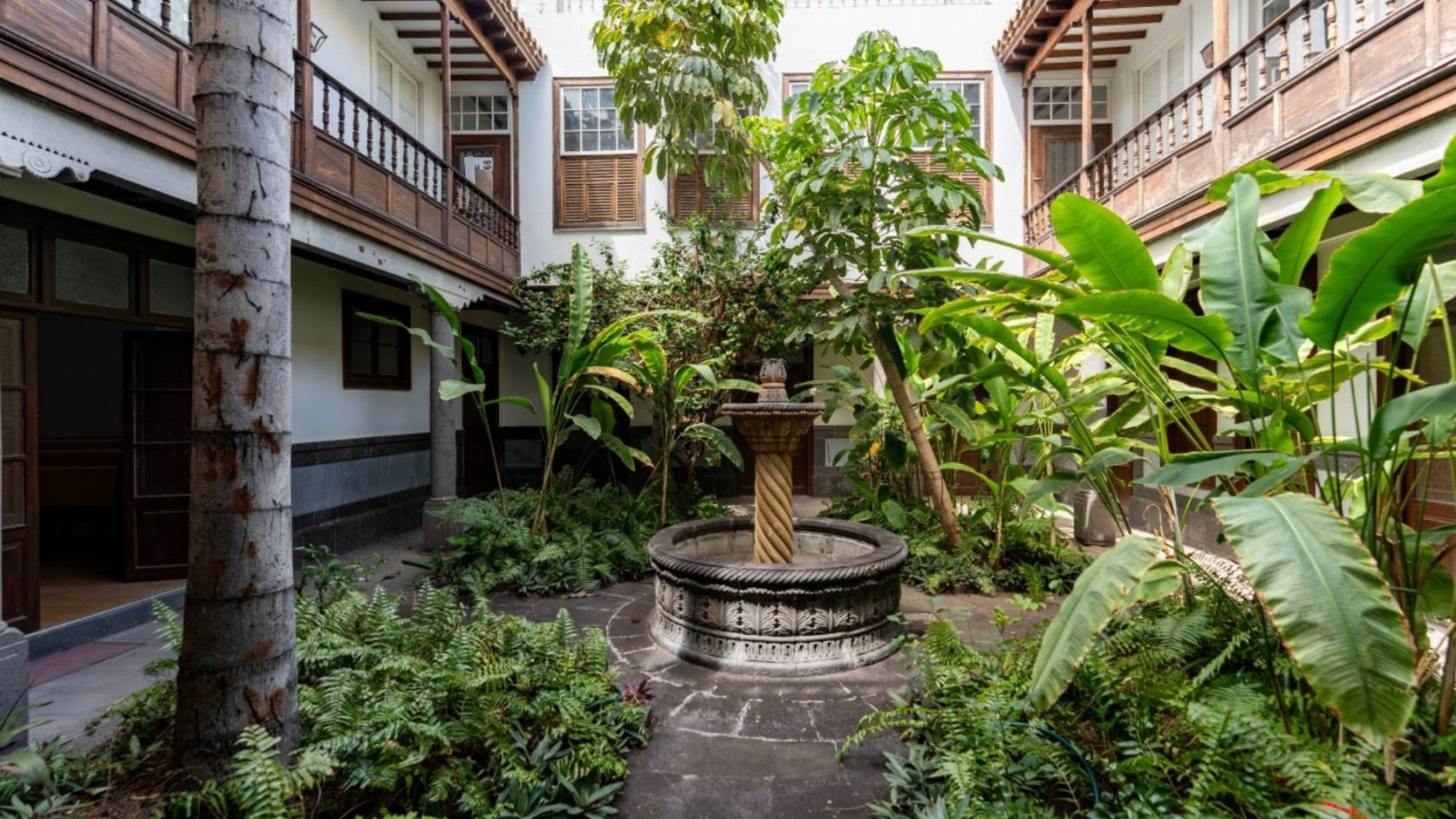
There are properties that defy the cold arithmetic of square meters, becoming living repositories of centuries past. In the heart of Vegueta, the founding nucleus of Las Palmas, the walls hold echoes of navigators, chronicles of corsairs, and the indelible marks of the great lineages that shaped the destiny of the archipelago. The recent closing by Engel & Völkers, under the leadership of managing partner Jose Núñez, highlights that high-end real estate on the Atlantic coast doesn't respond to fleeting trends, but rather to the undeniable pulse of history.
The stately mansion at the center of this latest transaction —which had been on the market for several years before finding the ideal buyer— is directly linked to the lineage of the Counts of Vega Grande, one of the key families in the socio-economic formation of Gran Canaria.
The origins of the noble title date back to September 23, 1777, when Charles III granted Fernando Bruno del Castillo Ruiz de Vergara vast estates stretching from Vega Grande to Maspalomas, Tirajana, and Arguineguín. For two centuries, these southern lands maintained a predominantly agricultural character until, in the early 1960s, the family spearheaded a radical transformation that would redefine the island's economy.
In 1961, propelled by the weight of its legacy, the clan promoted the international urban planning competition 'Maspalomas Costa Canaria', encompassing 2.000 hectares and 17 kilometers of coastline. With the participation of 148 teams and a jury of international renown—including figures such as Franco Albini and Pierre Vago—the winning project by the French firm SETAP laid the scientific and planned foundations for one of Europe's most powerful tourist destinations. At the forefront of this endeavor was Alejandro del Castillo y Bravo de Laguna, the 9th Count of Vega Grande, born on the emblematic Balcones de Vegueta street. His passing in May 2020 left behind the memory of a brilliant man who combined noble tradition with 20th-century business acumen.
The sale of this architectural gem in Vegueta—a neighborhood formally established on June 24, 1478, with the landing of Juan Rejón—confirms that today's buyer of unique properties seeks a profound connection with heritage. Among courtyards with silent archways, woodwork crafted from durable pine, and blue stonework from the San Lorenzo quarries, the transaction demonstrates that luxury in the historic center of Las Palmas is no longer valued for mere speculation, but rather for the privilege of safeguarding five centuries of Atlantic history.
The story of the Countess family doesn't end with the tourist landmarks of the south; rather, it finds its most human and luminous counterpart in the figure of Countess María Teresa Rivero y del Castillo-Olivares, whose social commitment left an indelible mark on the island. At her initiative, and through the donation of land in El Lasso—in collaboration with Carmen Crespo and with the support of the Island Council—the foundation stone of the San Juan de Dios City was laid on January 24, 1969.