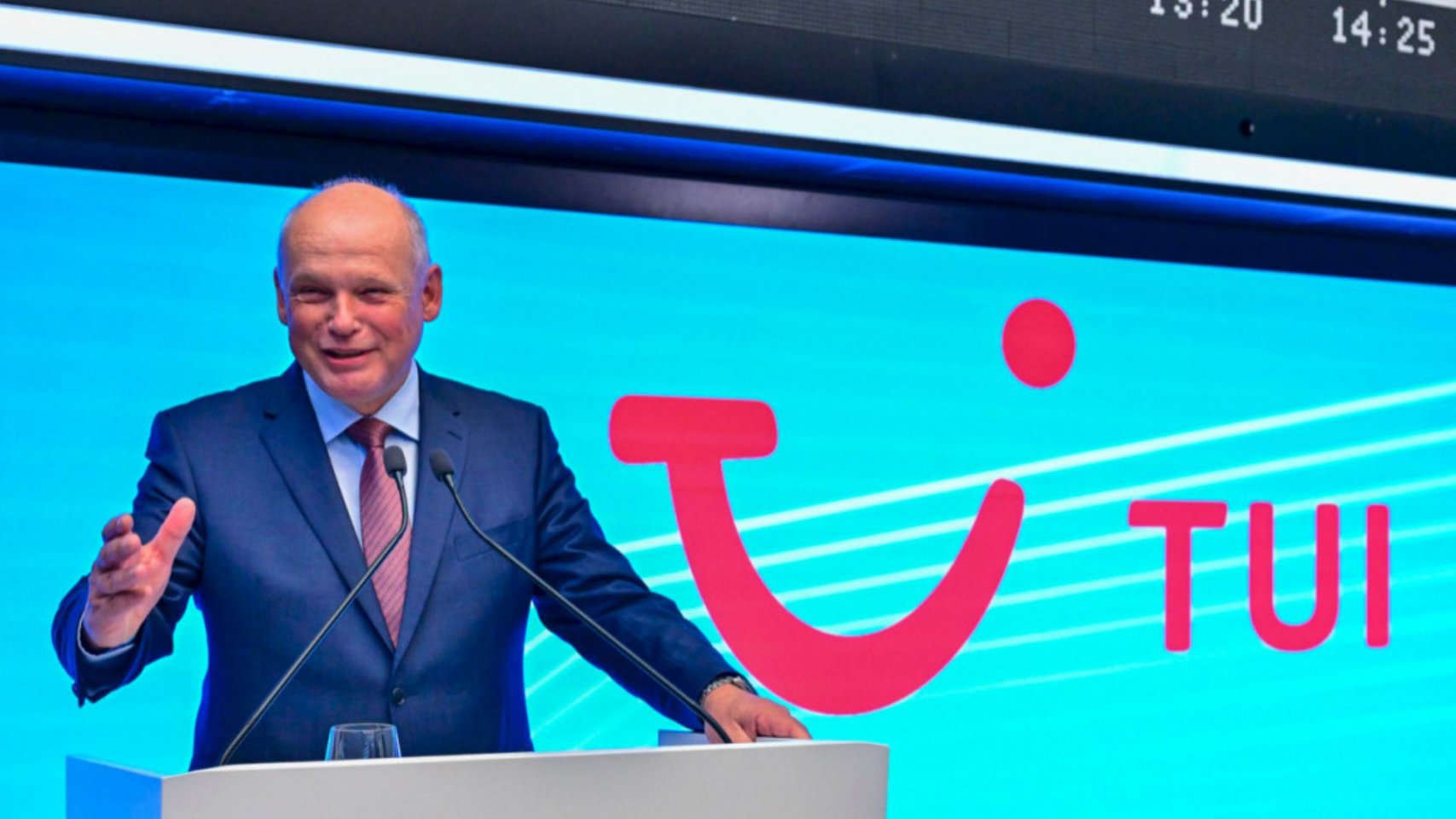
Southern Gran Canaria faces a delicate competitive balance as major European tour operators redesign their strategies in the face of an economic downturn that has reduced growth in source markets to a record low of 0%, or the lowest growth in 10 years in Germany. In a recent interview with the specialized publication tip-online, Sebastian Ebel, CEO of TUI AG, analyzed the key factors for the multinational tourism company, highlighting that, despite unforeseen crises and international conflicts, the group has managed to maintain financial stability after achieving 14 consecutive quarters of improved operating results: “We have continuously improved our results for 14 consecutive quarters. So we are on the right track, and then this unnecessary and terrible war comes along.”
The evolution of Central European demand directly influences the tourism pulse of strategic enclaves such as Maspalomas, where the multinational manages massive flows of travelers while adjusting its net profit forecasts from the initial 1.500 billion euros to a range of between 1.100 and 1.400 billion euros.
According to the CEO of TUI AG, the slowdown in growth in priority markets has forced the company to accelerate its transition to a model focused on differentiated, high-value-added products. Ebel points out that, faced with volatility and the costs stemming from tensions that have led to expensive fleet repatriations, the group prioritizes the strength of its operations: “The economic situation in Europe is not exactly optimistic. Germany, at the bottom of the list, has had its lowest growth in ten years.”
The executive also addresses the structural challenges of the sector and the residential pressure in sun and beach destinations, arguing that organized complexes operate as elements of economic stability and noting that the group's global hotel expansion represents only a minority segment of total revenues while concentrating large volumes of local employment.
In response to the debate on urban saturation and access to housing, Ebel reflects on coexistence in this way: “Therefore, we generally enjoy a good reputation. The biggest problem is housing. We don't eliminate housing; in fact, we create it. I understand that it can be annoying for the local population when there are too many tourists at once. It is necessary to find a balance. It is the responsibility of politicians to create a healthy balance.”
Looking to the immediate future, the tourism giant's strategy involves consolidating its transition into a global leisure brand, expanding its international hotel portfolio to increase the weight of its own properties and broaden its presence in emerging markets in Asia and Latin America, which already account for approximately 10% of the segment's global revenue with significantly higher profitability. Ebel concludes that technological adaptability and confidence in professional distribution will be key to competing internationally, stating, "I firmly believe that, in the long term, there will continue to be room for good travel agencies, which will also use artificial intelligence for customer service."