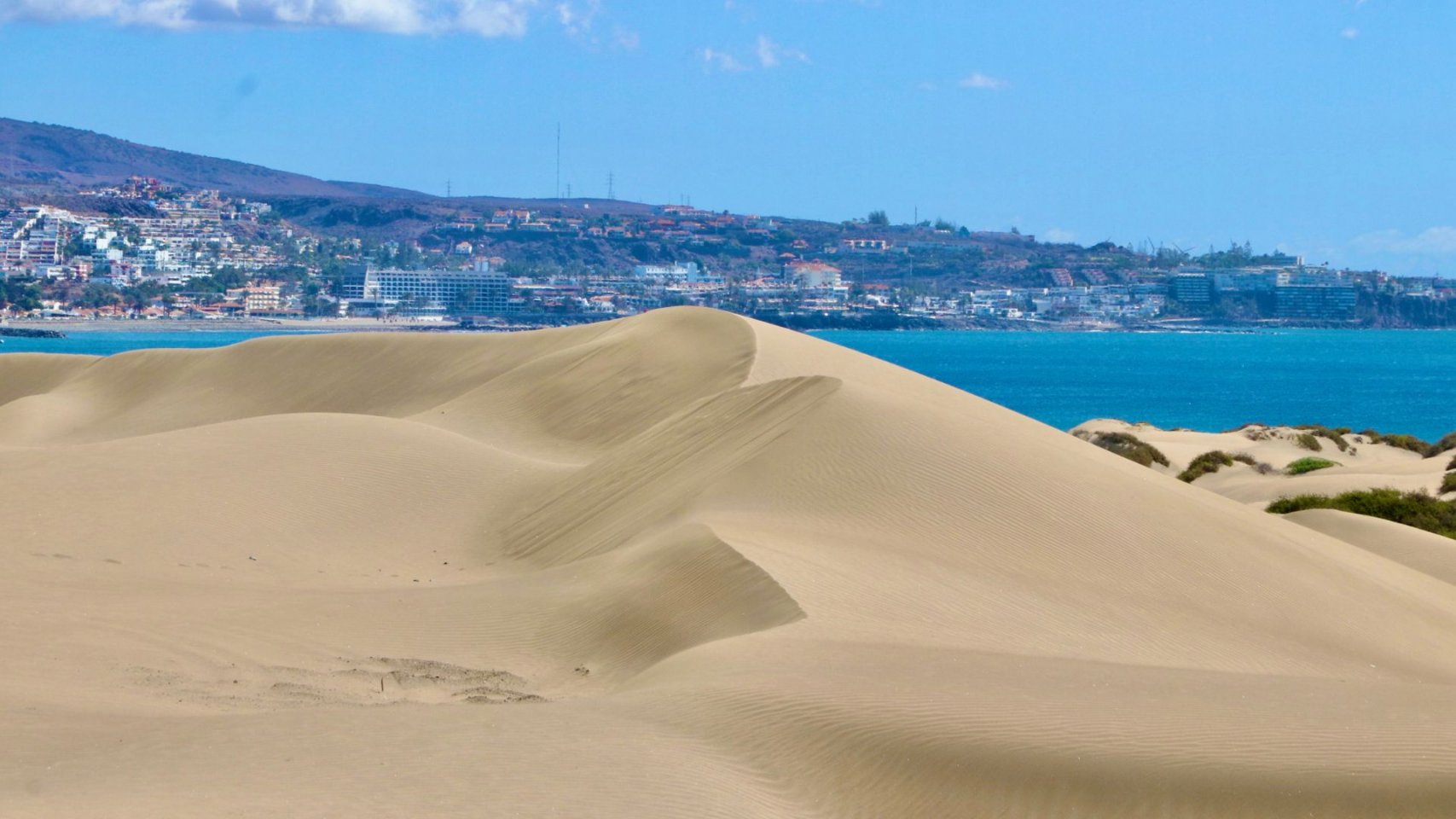
The Gran Canaria Island Council has launched an ambitious strategy to save the iconic Maspalomas Dunes ecosystem. The council has approved the "Masdunas III" project, a comprehensive environmental restoration initiative to be carried out over four years, from 2026 to 2029, with a budget of €4.235.000. This plan builds upon the successful pilot projects and the "Masdunas II" phase, implemented since 2018 in response to the urgent need to correct the sediment deficit and halt the degradation of this protected natural area.
This Wednesday, the BOC published that the request for authorization to occupy public maritime-terrestrial land for the execution of the project called 'Conecta Dunas', in the Special Nature Reserve of the Maspalomas Dunes, is being submitted to public information.
The intervention, which will be carried out by the public company Gesplan, has the primary objective of renaturalizing the area, protecting its unique environmental features from human pressure and climate change. The project includes a wide range of actions, beginning with the cleaning and removal of accumulated waste, both general waste and debris from old constructions that are visible in the dune system. Intensive maintenance of signage, access points, and permitted trails will also be undertaken, addressing the damage caused by the proliferation of unregulated paths and vandalism.
One of the central focuses of Masdunas III is the control and elimination of invasive exotic flora, species that displace native vegetation, replacing them with plantings of rockrose and other native species. Similarly, action will be taken regarding invasive and feral fauna (cats, hedgehogs, rabbits, etc.) and unauthorized artificial structures, such as piles of firewood or rocks, that alter the landscape will be dismantled.
The project is not limited to the physical restoration work, but also incorporates a strong scientific and outreach component. Specialized scientific monitoring is planned to evaluate the effectiveness of the actions, analyze the morphological evolution of the dune, and conduct ecological monitoring of the Maspalomas Lagoon. In parallel, a communication and awareness plan will be developed, including the presence of environmental educators, updates to digital channels, workshops, and the implementation of an Environmental Education Program aimed at diverse groups. Environmental surveillance, supported by drones, will complete the system to ensure compliance and safety within the Reserve.
This initiative, justified by the Cabildo's lack of resources and the need to contract specialized external services, grants Gesplan the status of an in-house entity of the Cabildo of Gran Canaria. The total budget of €4.235.000 will be distributed over four years, with an investment of €860.000 in 2026 and €1.080.000 for each of the remaining years (2027, 2028, and 2029).